📧 Our emails are down due to the Microsoft outage, but we’re still here! Please give us a call. 📞 01250 872261

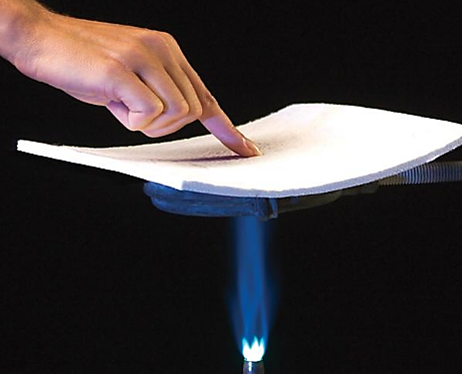
Aerogel is made by the supercritical drying of silica gel until the liquid component has dried out and been replaced with gas. The resulting lightweight material has a low thermal conductivity and is also hydrophobic and vapour-open.
However, the rigid material is extremely brittle. To create a more usable product, the silica aerogel is embedded into a polyester or glass fibre carrier fleece. This gives it flexibility without compromising the integrity of the material or its excellent thermal properties.
We offer the Spacetherm® range of aerogel-based solutions – ranging from Spacetherm A1 (aerogel blanket on its own) to Spacetherm laminates (where the blanket is bonded to a range of building boards).
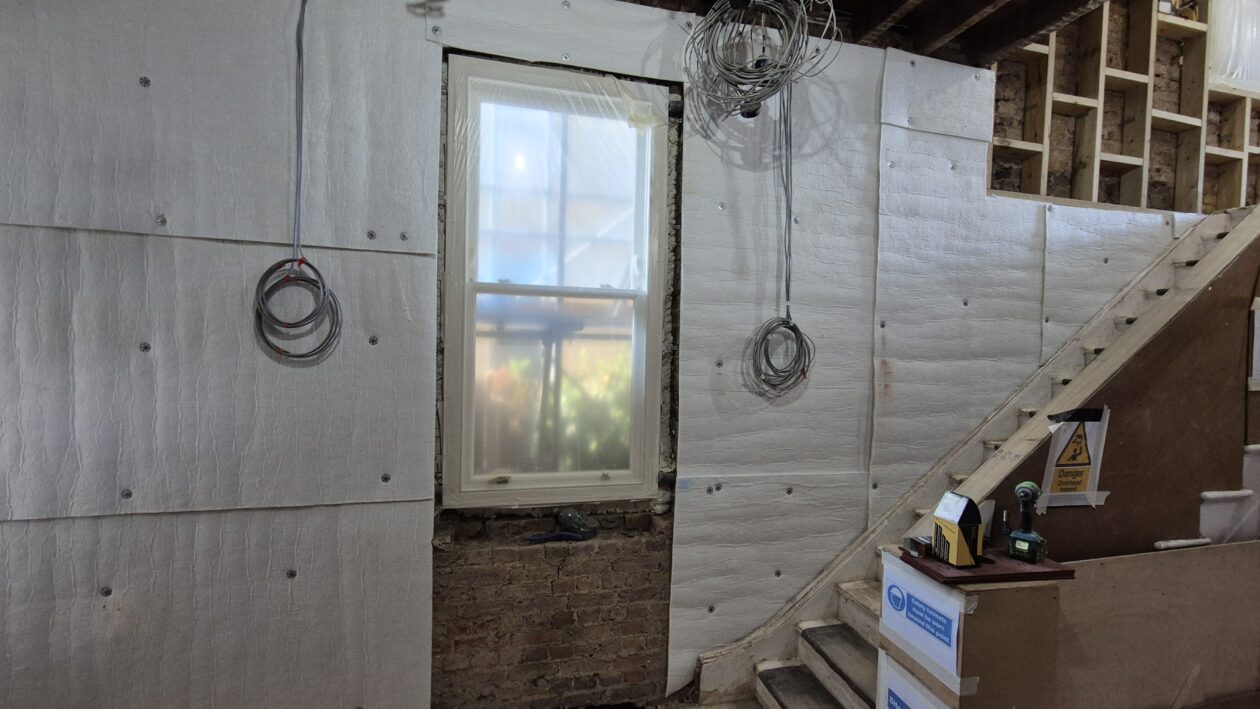
In any of these forms, aerogel’s most common application is in traditional solid-walled properties. As a hydrophobic material, it doesn’t absorb liquid water from wet walls. But its vapour openness allows moisture vapour to pass through, maintaining the breathability of the wall construction. A Spacetherm product can be installed directly to the face of a wall, without requiring a clear cavity.
The performance characteristics of aerogel make one fact inescapable: it’s a premium product. As such, it may not be a viable option for insulating a whole building.
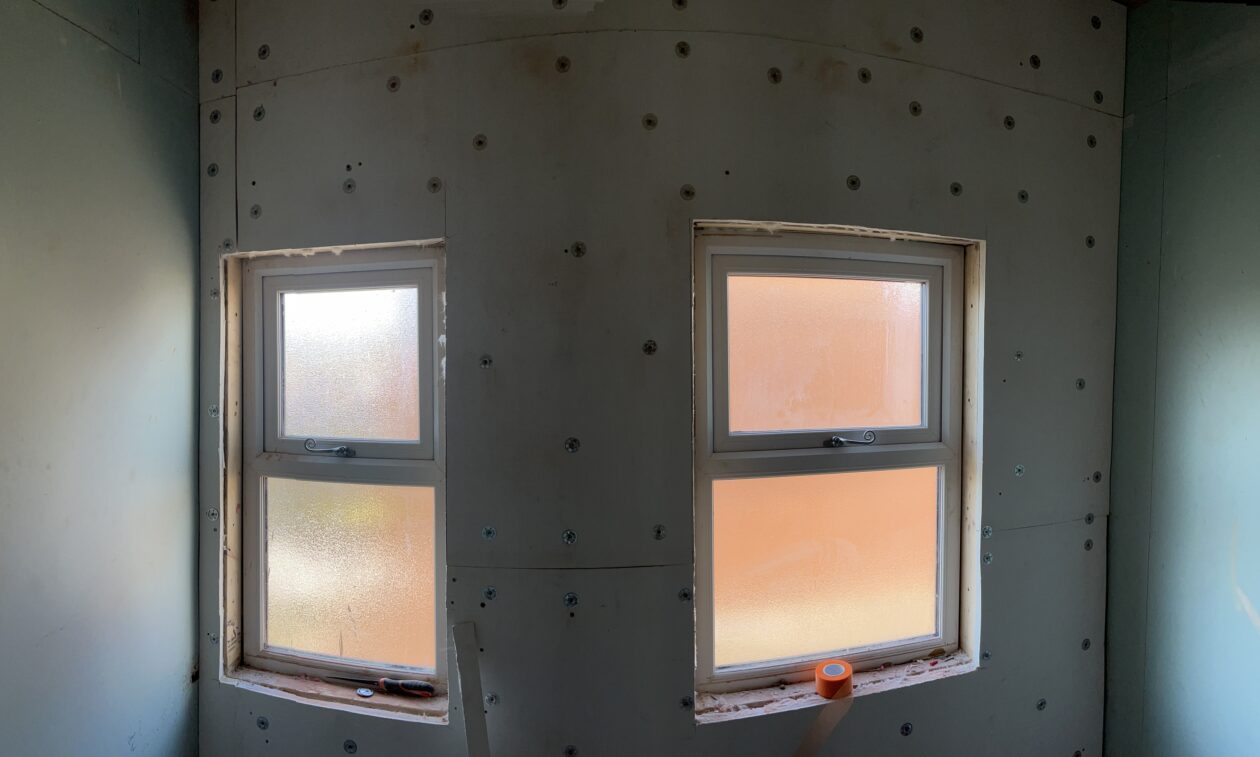
Instead, aerogel is best deployed in hard-to-treat areas where more ‘conventional’ insulation products are either unsuitable or take up too much space. A good example is window reveals in a retrofit project, where even the thinnest rigid insulation board often cannot be accommodated.
Left uninsulated, the reveal is a cold bridge between the window and the newly-installed internal wall insulation. With the rest of the external wall insulated, the untreated reveals become responsible for a proportionally greater amount of heat loss compared to before.
Excessive heat loss and moisture are common risks at thermal bridges. Compared to the potential issues and long-term costs of using the wrong insulation or not insulating at all, aerogel’s premium is more than justified.
Any insulation type loses effectiveness if it is installed poorly and warm air can bypass it. In the case of aerogel, this loss of effectiveness can be magnified because the material has such a low thermal conductivity. So understanding what to do with it before you start specifying and installing it is important – otherwise the client’s money is easily wasted.
U-value calculations can account for a limited range of repeating thermal bridges (e.g. timber rafters bridging an insulation layer). However, thermal bridging (psi value) calculations are required for non-repeating linear thermal bridges (e.g. around a window or door) or point thermal bridges (e.g. a rainscreen cladding bracket penetrating an insulation layer).
As part of our technical support services, we are able to provide thermal bridging calculations to demonstrate the effectiveness of Spacetherm solutions in reducing linear bridging heat losses. Reducing thermal bridging, especially in period and traditional properties, starts with thoughtful design. It encompasses appropriate materials, like aerogel, and then requires careful construction.
The best time to tackle thermal bridging is therefore at design stage, because it means details can be honed to balance practicality and performance (especially important in retrofit, where internal space may be more limited). Waiting until a project is on site to work out a detail can lead to compromises that could have been avoided.
U-value targets are relatively straightforward to understand, but there is no such clearly defined threshold for thermal bridges. What is a good psi value? What is a bad psi value?
For this reason, an important outcome to look for in thermal bridging calculations is the surface temperature factor, or fRSI. This value indicates the internal surface temperature at the junction detail being assessed, and therefore whether there is a risk of condensation occurring.
It allows the designer/specifier to judge whether a thermal bridging detail is being treated with enough insulation to avoid moisture risks that could lead to health and comfort issues like mould growth.
In residential buildings, an fRSI of 0.75 or greater is the target for ensuring that condensation will not occur. The factor therefore provides a useful indication of whether the performance of the junction aligns with the overall goals for the performance of the building.
Find out more: https://proctorgroup.com/products/spacetherm