
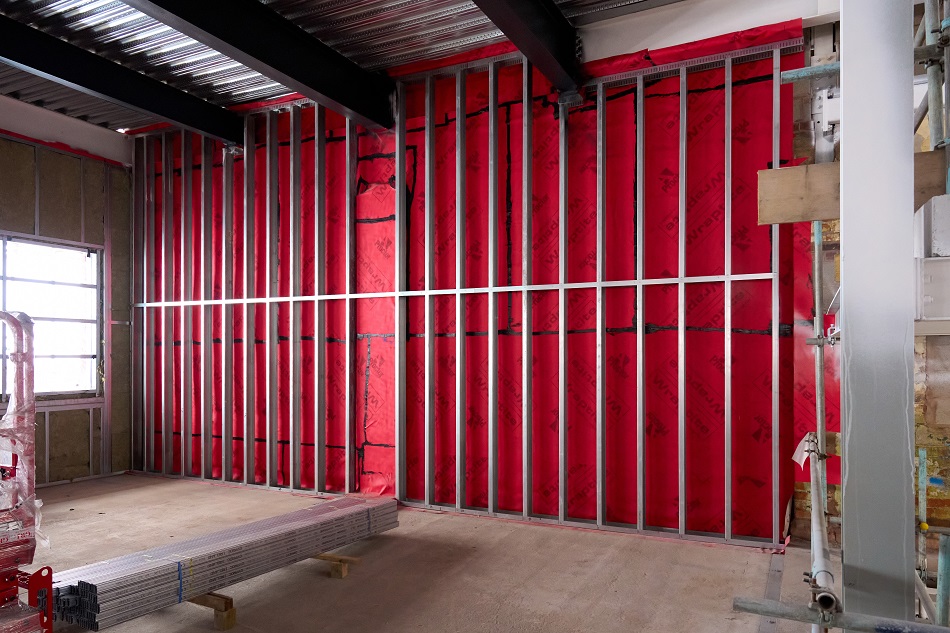
As a membrane manufacturer, many of our products are designed to – among other functions – either restrict or allow the passage of moisture vapour through them. It’s little surprise, therefore, that one of the most common questions we receive is about different measures of vapour permeability.
Such values are relevant to almost all construction products, not just membranes. To produce a U-value calculation for any element, and then a condensation risk analysis linked to it, it’s necessary to have accurate vapour permeability data for all of the components in that element.
Specifying suitable components in the correct sequence means being able to recognise the correct unit to go with specific data. With that in mind, let’s start our exploration of units of measurement.
Equivalent Air Layer Thickness: Sd Values
In an effort to achieve equilibrium, moisture vapour naturally diffuses from areas of high vapour pressure to areas of low vapour pressure. Buildings may therefore be designed to facilitate this movement (vapour open) or block it (vapour closed). Materials are specified accordingly.
A material’s Sd value is its resistance to moisture vapour movement, compared to the resistance of one metre of still air. An Sd value is given in metres. The lower the Sd value, the more vapour permeable a material is. For example, a metal can have an Sd value of a couple of hundred metres. By contrast, our Wraptite® membrane has an Sd value of just 0.039m.
Thanks to standards like BS EN 13859-1 and BS EN 13984 (which define and characterise flexible sheets used as roof underlays and vapour control layers respectively), Sd values are relatively familiar now. Nevertheless, people still request membranes based on their vapour resistance, expressed in the units MNs/g.
Vapour Resistance and Resistivity: MNs/g and MNs/gm
Vapour resistance is a property of the specific thickness of a product or material. As it is a measure of resistance, a higher number again means that the material has a higher resistance to the movement of moisture vapour.
There is a simple conversion between an Sd value and vapour resistance, so different declarations can be compared where necessary. Dividing an Sd value by 0.2 (the vapour permeability of still air) gives the material’s vapour resistance. So our Procheck® A2 membrane, with a minimum Sd value of 1500m, has a minimum vapour resistance of 7500 MNs/g.
You may sometimes see a mention of vapour resistivity, which is property of the material generally (rather than specific thickness) and uses the slightly different unit MNs/gm. This is used where a product is offered in different thicknesses, such as thermal insulation, and is not usually used for membranes.
Membrane Thickness: Gauge
The relatively recent development of modern membranes for facades and roofs has ensured their thickness is measured and declared in metric units, be that millimetres or microns (0.001mm).
Where extruded membranes are concerned, however, polythene vapour control layers (VCLs) and damp proof membranes (DPMs) are often still specified using the imperial unit of the gauge.
Traditionally, the gauge has acted as the measure for plastic films, sheets and membranes generally. It has been used to describe the thickness of everything from bin liners to industrial packaging to construction membranes.
When specifying polythene membranes in ground floors, a typical choice would be 500-gauge polythene for a VCL and 1200-gauge polythene for a DPM. Based on 4 gauge being equivalent to 1 micron, that means 0.12mm and 0.3mm respectively.
A modern ground gas protection membrane (like our Protech GM Super) will never have its thickness declared in gauge, because the standard that governs its manufacture and performance declaration uses metric units. In context of the polythene examples given above, Protech GM Super’s functional thickness is 0.4mm, but its vapour resistance and other physical attributes would be greater.
Don't Be Afraid To Ask
This article is designed to encourage confidence in using and understanding units of measurements. Even so, always be willing to check with a manufacturer if you are unsure about a unit of measurement and how it relates to a particular application.
The Proctor Group technical team is on hand to support you from the earliest stages of projects, directing you towards the most appropriate solutions to support the desired outcomes. That includes giving expert guidance on vapour permeability characteristics to help manage moisture and contribute to energy efficiency requirements.
Next month we’ll take a closer look at units of measurement for low energy and thermally efficient construction.
Find out more: https://proctorgroup.com/support-and-services
Related Products

Wraptite® – Vapour Permeable Air Barrier
Probreathe® A2 – Vapour Permeable Breather Membrane
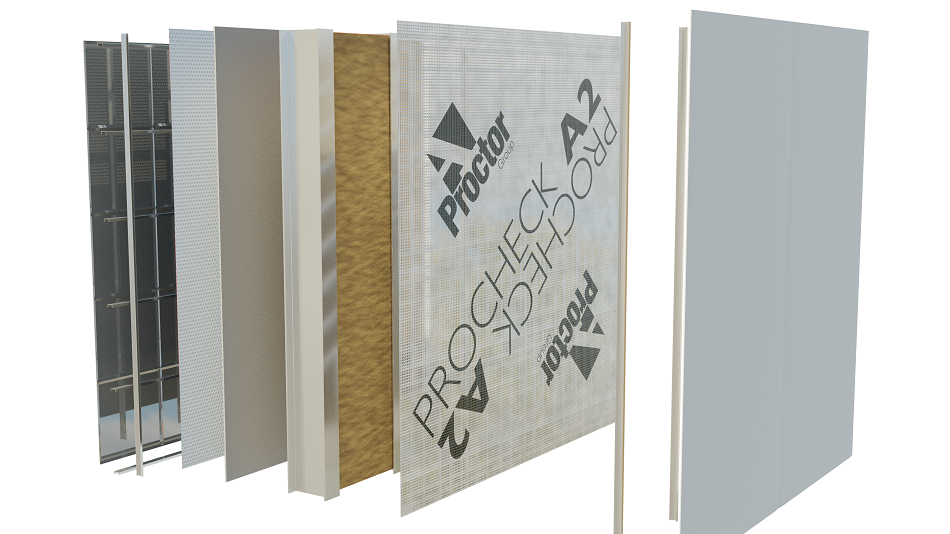
Procheck® A2 – A2 Fire-Rated Air and Vapour Control Layer
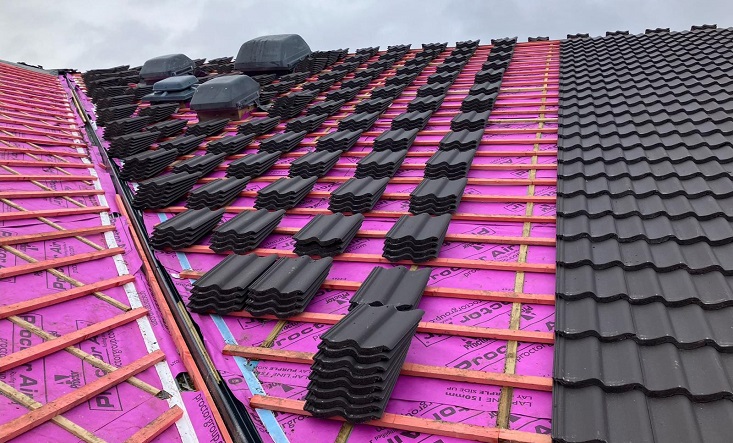
Proctor Air® – Air & Vapour Permeable Roofing Membrane
Latest Articles

Related Projects

Lightburne: Wraptite® for Airtightness and Wind Resistance in Apartment Facades
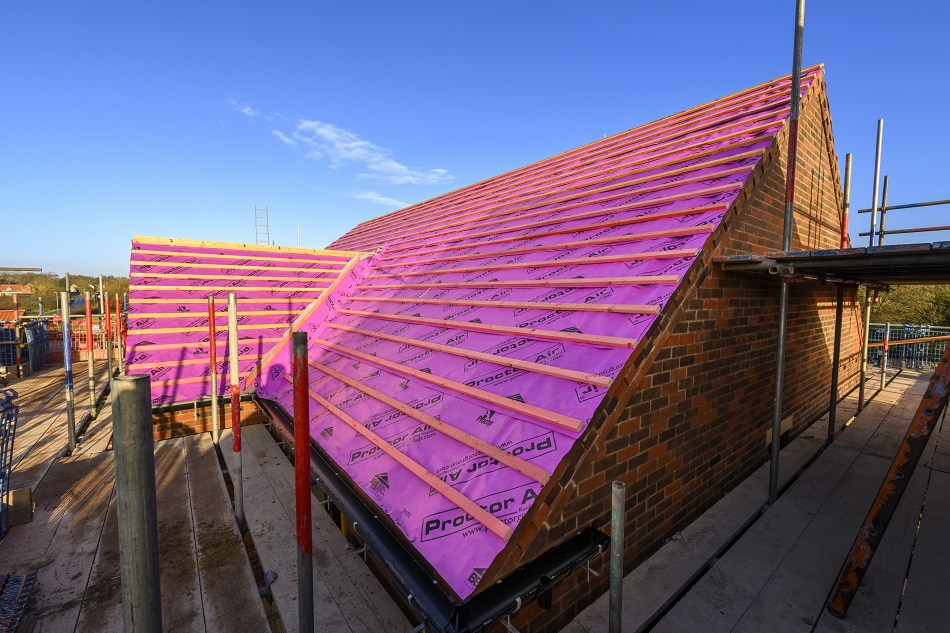
Priory Fields: Proctor Air® for Condensation Control in High-Specification Homes
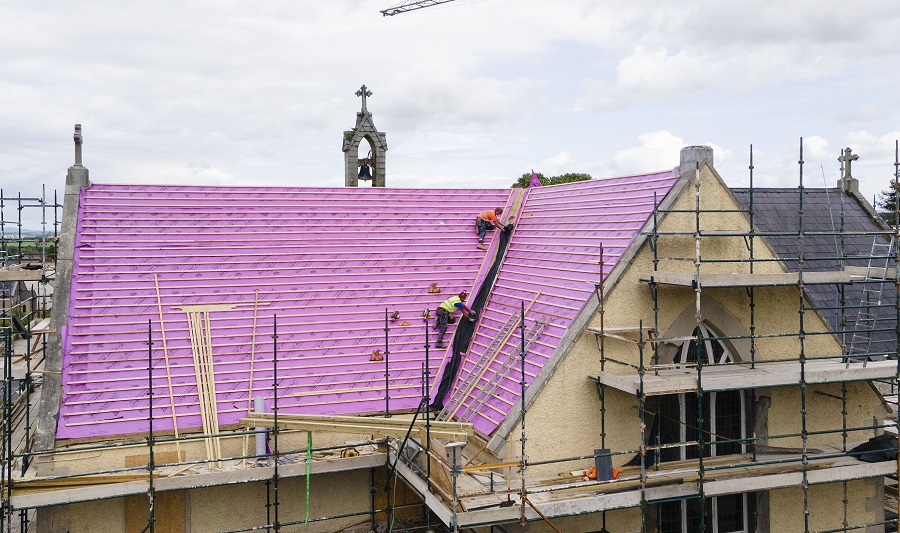
St Peter and St Paul Church: Proctor Air® for Condensation Control in Heritage Reroofing

Ultrapanel: Proctor Air® and Proctorwrap Reflect® for Rapid Offsite SIP Construction
Latest News


Request a Sample

Technical Advice

CAD Detail Review

U-Value Calculation

Book a CPD

Specification Check