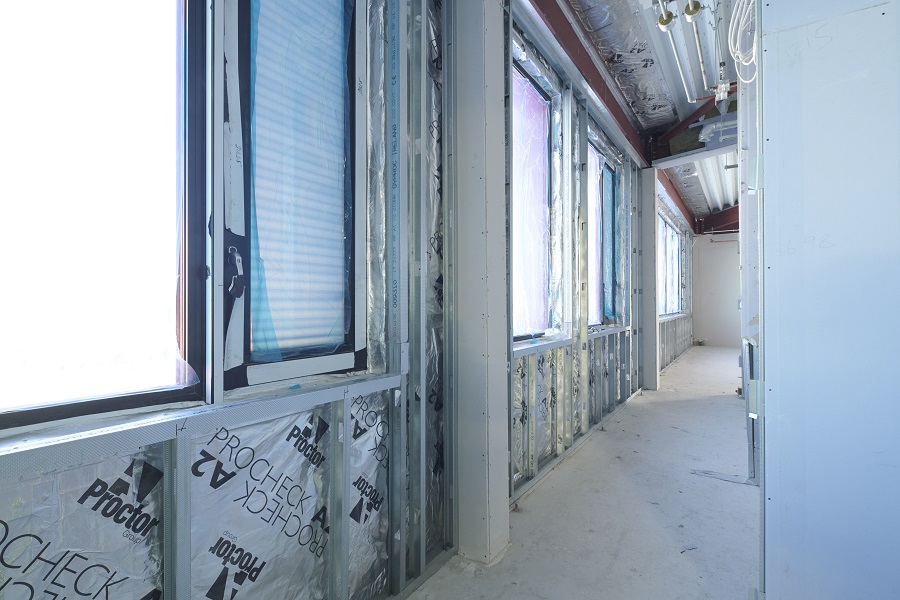
A fundamental pillar of NZEB Building Regulations is a high standard of airtightness. By limiting air leakage and reducing uncontrolled air movement, warm air is more likely to remain in the building in winter (and, conversely, less likely to enter the building in summer).
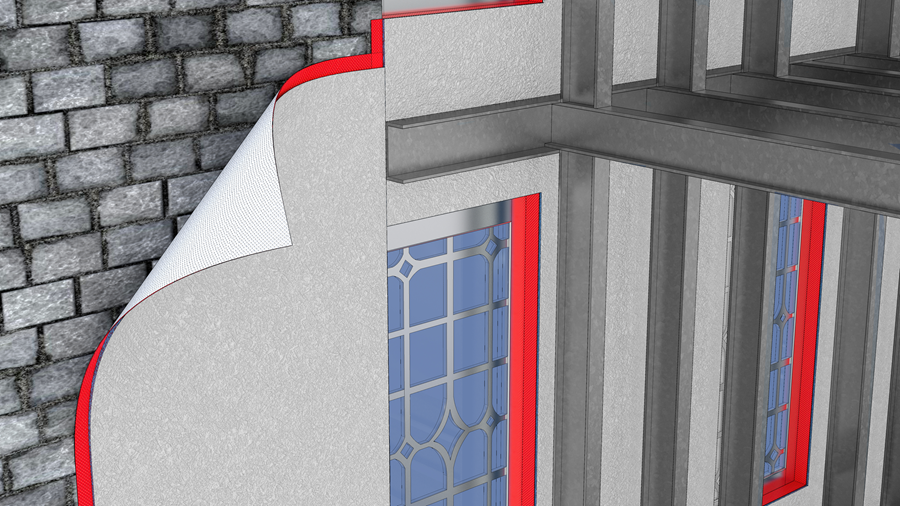
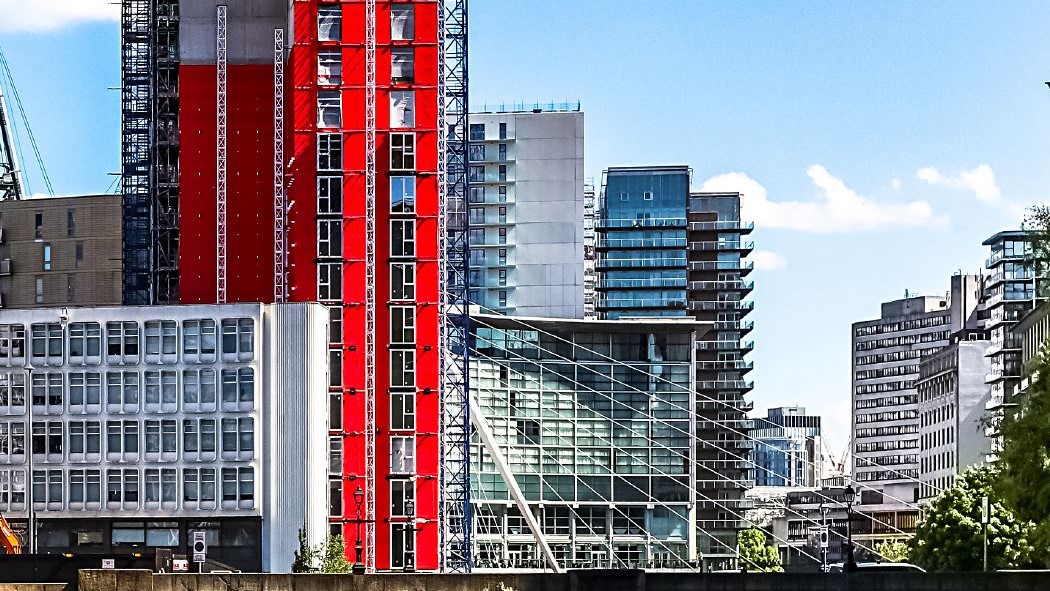
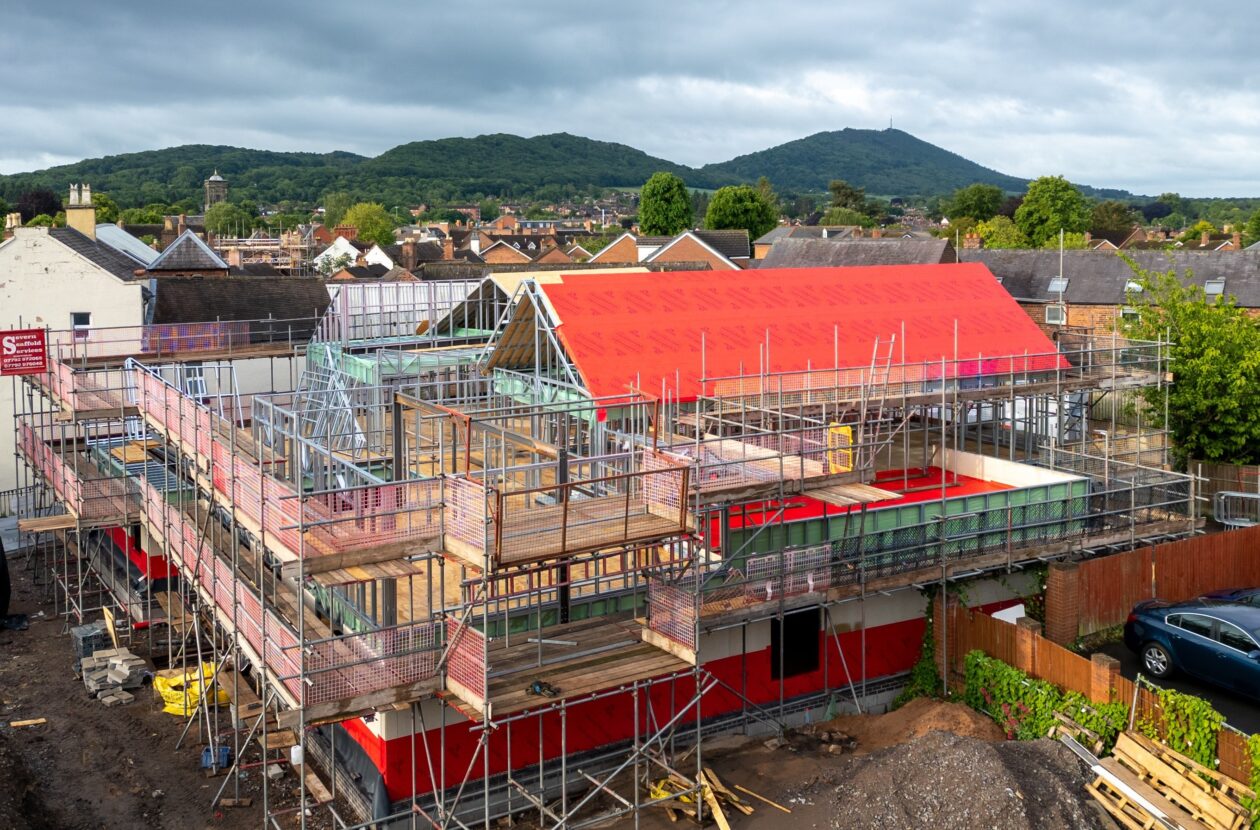
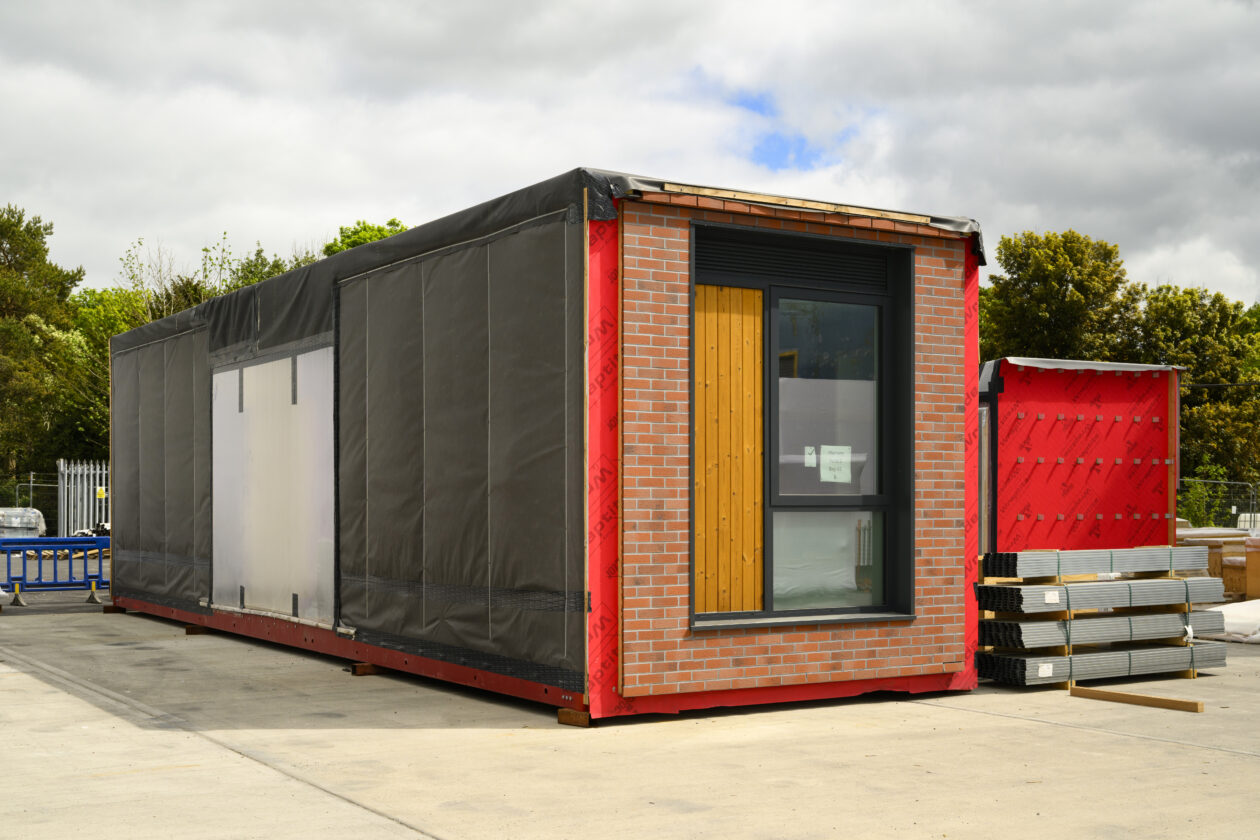
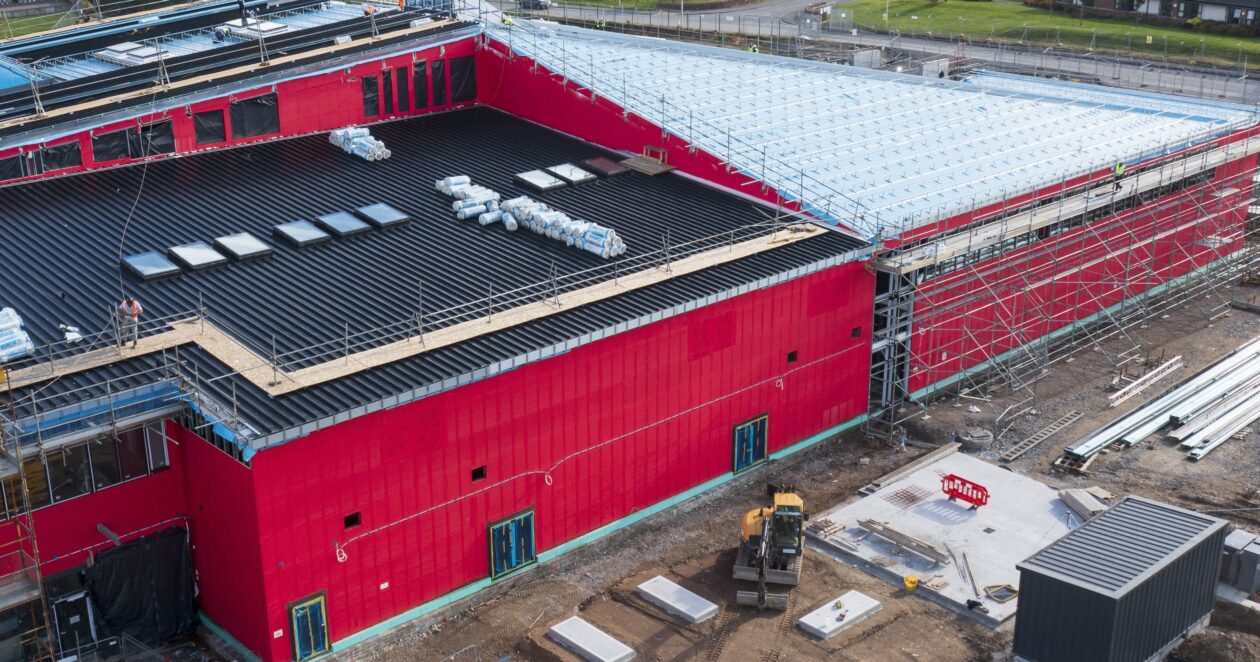
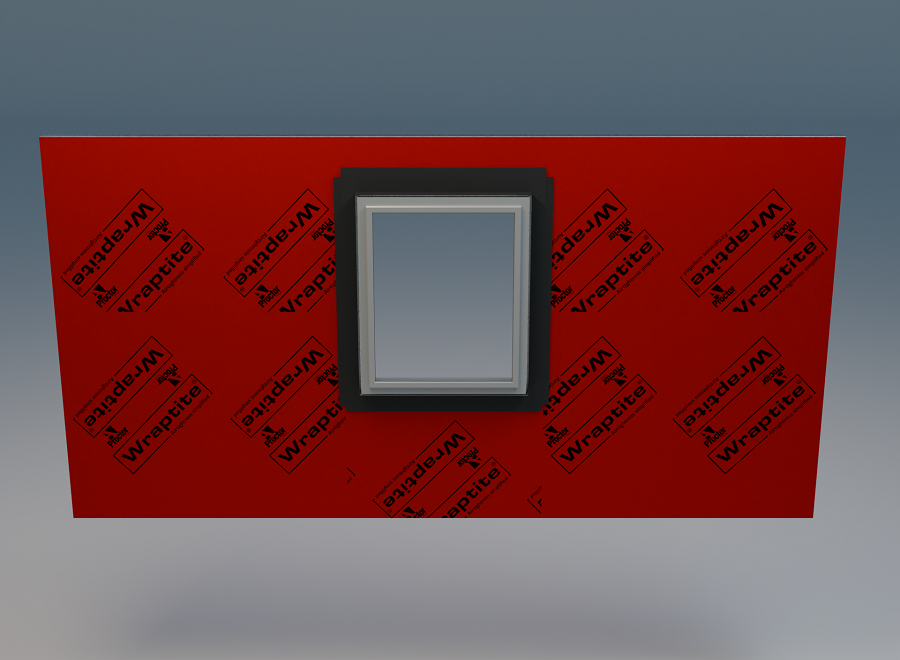
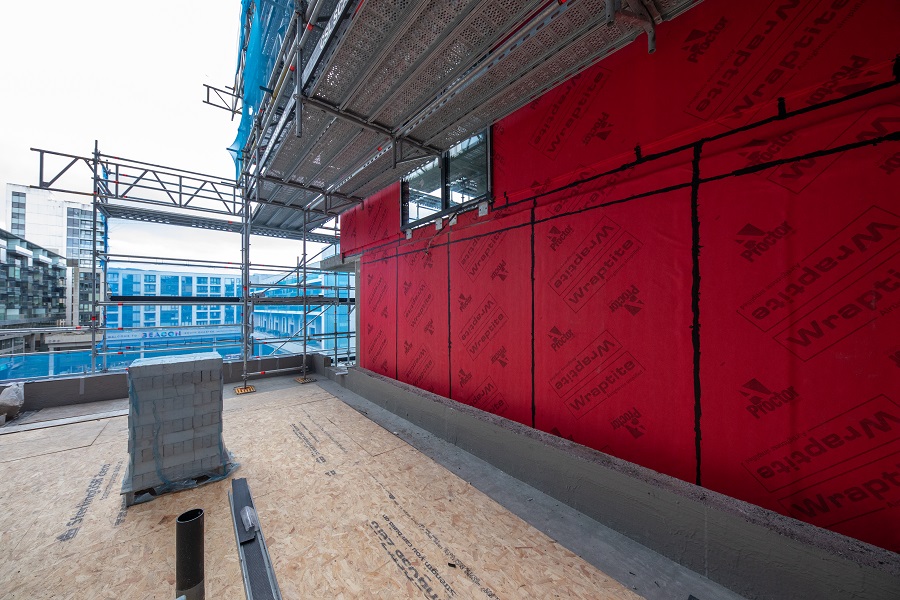
Rather than relying on an internal air barrier, Wraptite is installed to the external face of the wall structure. Here, the airtightness line is moved away from the internal services zone, simplifying detailing and reducing the number of penetrations.
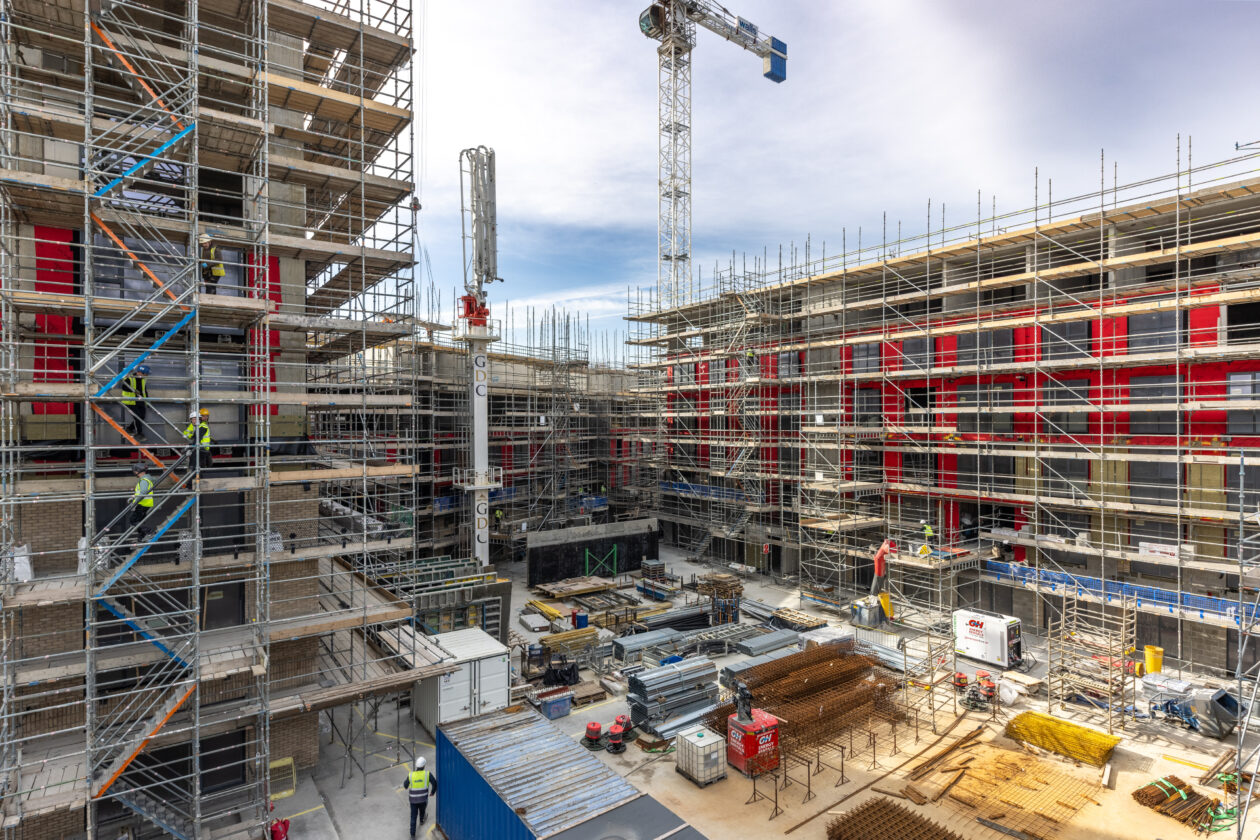
“I specified Wraptite on the first block we completed here, block 10. All airtightness tests were completed at block 10 and all passed with a result of less than 3m³/h/m² at 50 Pa. We then carried the specification forward to blocks 7, 8 and 9.”
Brian Reynolds – Contracts Manager at OBR Construction Group
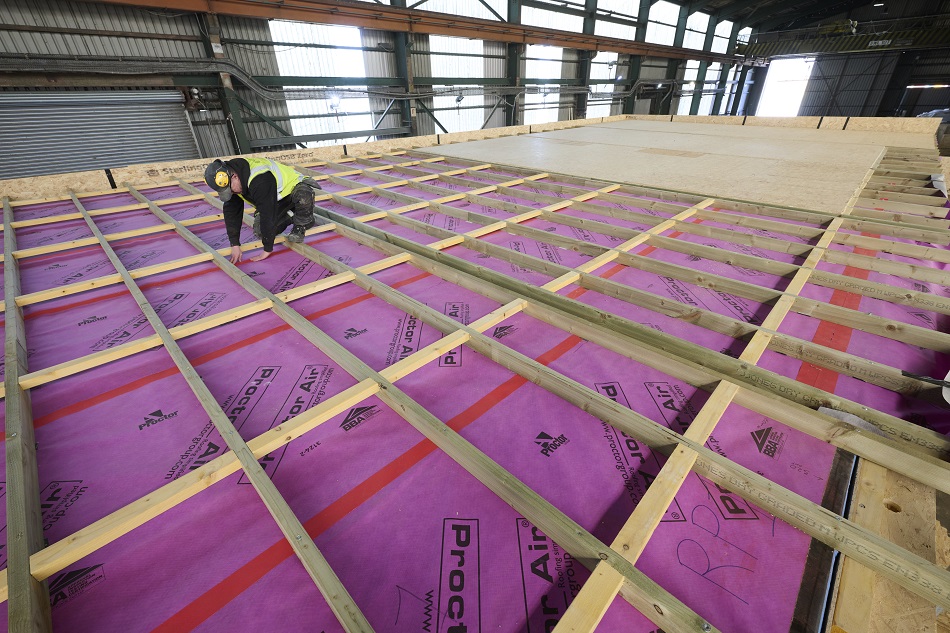
As a self-adhered membrane, Wraptite adheres well to a variety of substrates (including RC) without needing primers, sealants or tapes. Its patented adhesive technology has been trusted on projects worldwide for over 15 years, and Wraptite has been BBA certified for over a decade.
In addition to its airtight properties, Wraptite is a “breather” membrane – i.e. it is vapour permeable. By helping to manage moisture movement in the construction, it helps the concrete frame to dry out while reducing condensation risk in the facade.
To assist in delivering the designed performance, Proctor Group’s Regional Sales Manager, Tony Ruth, has visited site regularly to provide site observation reports. The reports are part of a suite of available technical support, ranging from initial U-value calculations and condensation risk analyses, to toolbox talks, to on-site support during the construction phase.