
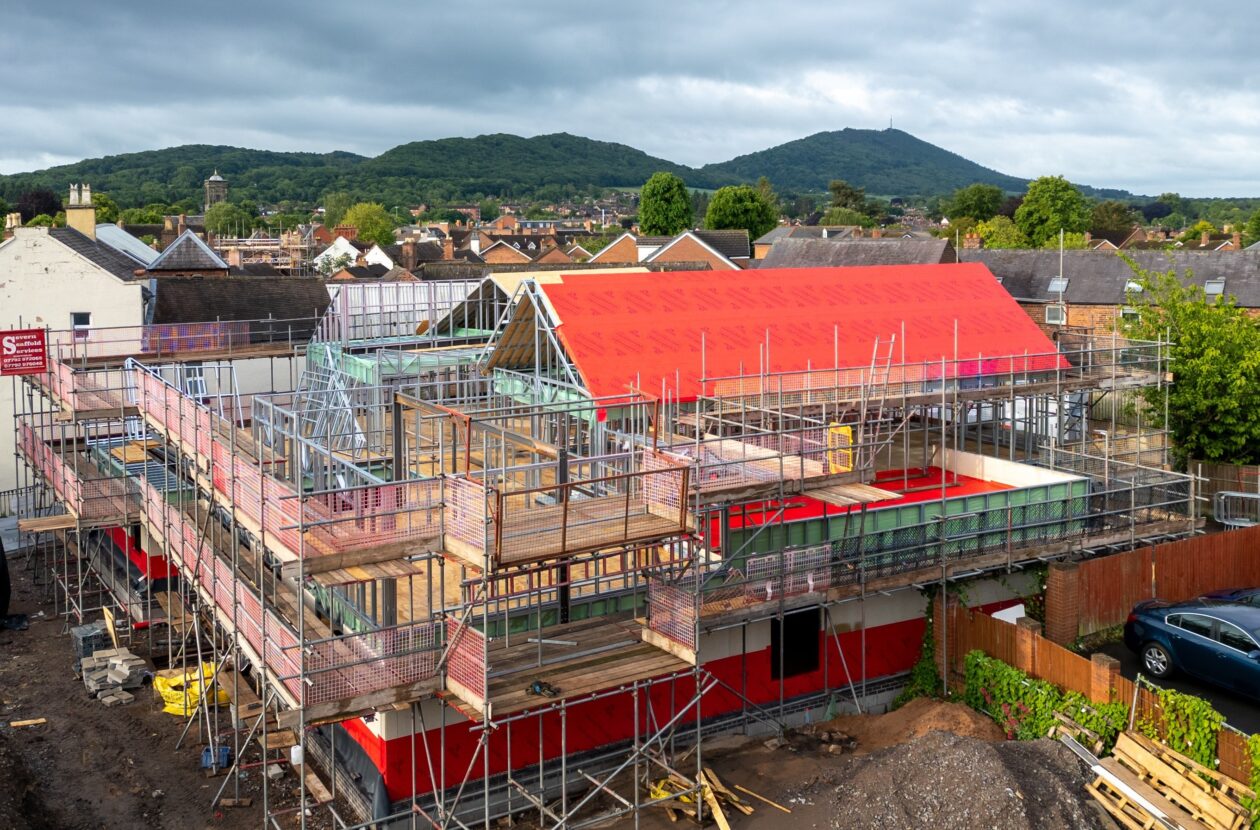
Some of the most searched-for terms and frequently asked questions on this website are about membrane terminology and function. What is a ‘vapour control layer’ compared to an ‘air and vapour control layer’? What is a ‘breather membrane’ and what is a ‘vapour barrier’?
The construction industry does not always use terminology consistently, with different names or terms sometimes being used to describe the same thing. So if you have ever asked any of these questions, maybe this article can answer them.
AVCLs and VCLs are fundamentally the same
Over time, the term ‘vapour control layer’ (VCL) has come to be replaced by ‘air and vapour control layer’ (AVCL). This change has been driven by improvements to airtightness requirements in national building regulations, increased adoption of standards like Passivhaus, and updates to codes of practice like BS 5250:2021 (management of moisture in buildings).
VCLs are layers, usually membranes, installed on the warm side of the thermal insulation layer. They significantly reduce the quantity of moisture vapour able to pass into the rest of a wall or roof construction. Less moisture vapour in a build-up means less likelihood of surfaces on the cold side of the insulation allowing condensation to form unseen within the construction.
Moisture vapour can diffuse through materials, but it is also carried by warm air. The movement of warm air into and through a wall or roof acts as another form of transport for moisture vapour. Not only that, it increases heat loss from the building’s interior – increasing energy consumption and reducing comfort.
Specifying an AVCL instead of a VCL is therefore a recognition of the importance of limiting air movement as well as moisture diffusion. In practice, VCLs are airtight anyway and therefore can be classed as AVCLs.
However, there are times when a build-up might feature two membranes chosen for specific functions. We’ll discuss this in more detail shortly.
‘Breather membrane’ can be a misleading term
Another common search term is people looking at the difference between ‘breather membranes’ and ‘vapour barriers’. The term vapour barrier typically means a vapour control layer so, really, the question is trying to understand how a breather membrane differs from a VCL/AVCL.
A ‘breather’ or ‘breathable’ membrane allows the passage of moisture vapour through it. We refer to this, more precisely, as a vapour permeable membrane. When ‘breather membrane’ is used to describe a pitched roof underlay, it is generally referring to membranes that are low resistance (LR); i.e. vapour permeable.
Air permeability in pitched roof underlays needs to be considered
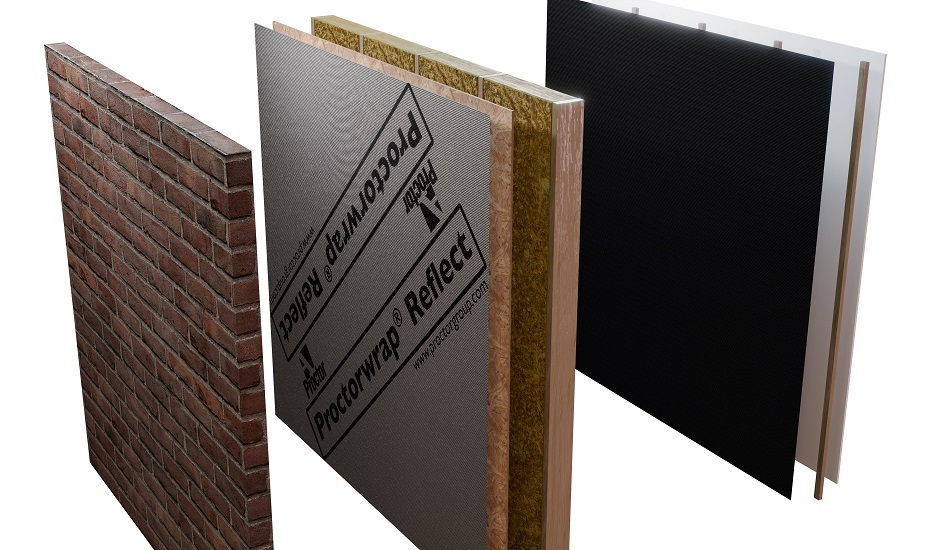
Roof underlays such as Proctor Air® are air permeable as well as low resistance, or APLR. This is a crucial distinction, as they create a more uniform flow of air from roof spaces and eliminate the need for ventilation products in the roof.
Despite this, APLR underlays are often and readily grouped in with LR underlays using the generic ‘breather membrane’ terminology. It is not necessarily incorrect to do so, but it is certainly less precise and does not accurately convey how a roof specification is intended to perform.
An airtight layer does not have to be internal
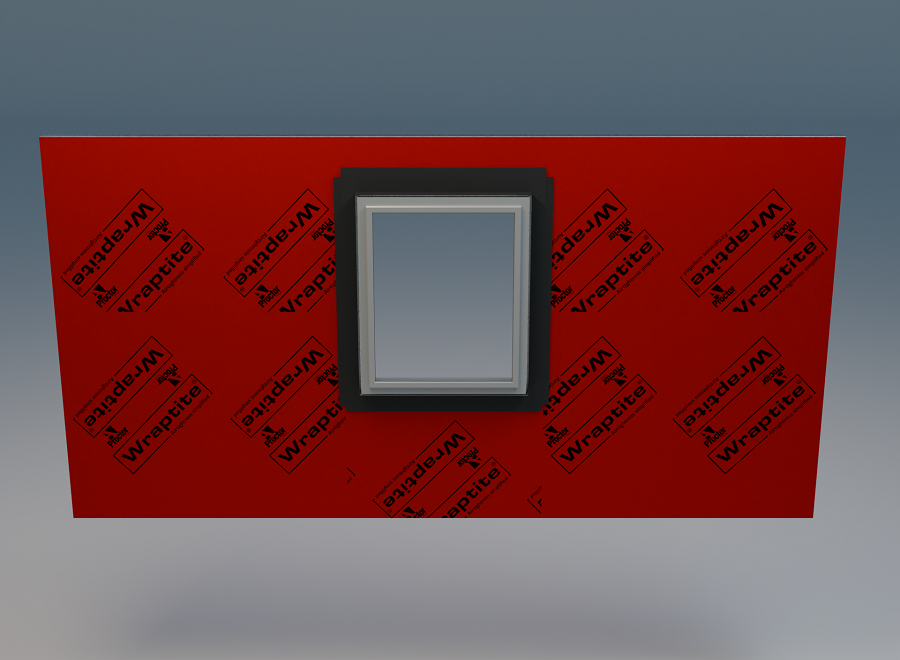
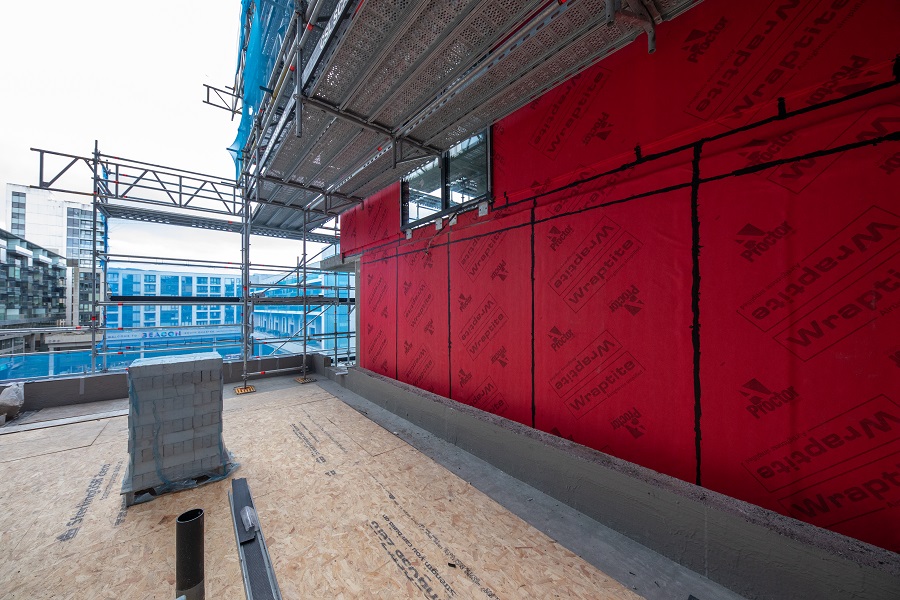
We’ve covered membranes that are both air and vapour tight. We’ve covered membranes that are both air and vapour permeable. We also need to address membranes that are airtight and vapour permeable, like our Wraptite® system.
Given the importance of airtightness to building performance, there are a variety of reasons why an external airtightness line is preferable to an internal one. For example, internal airtightness layers are easily damaged or disrupted, with no guarantee of being properly reinstated.
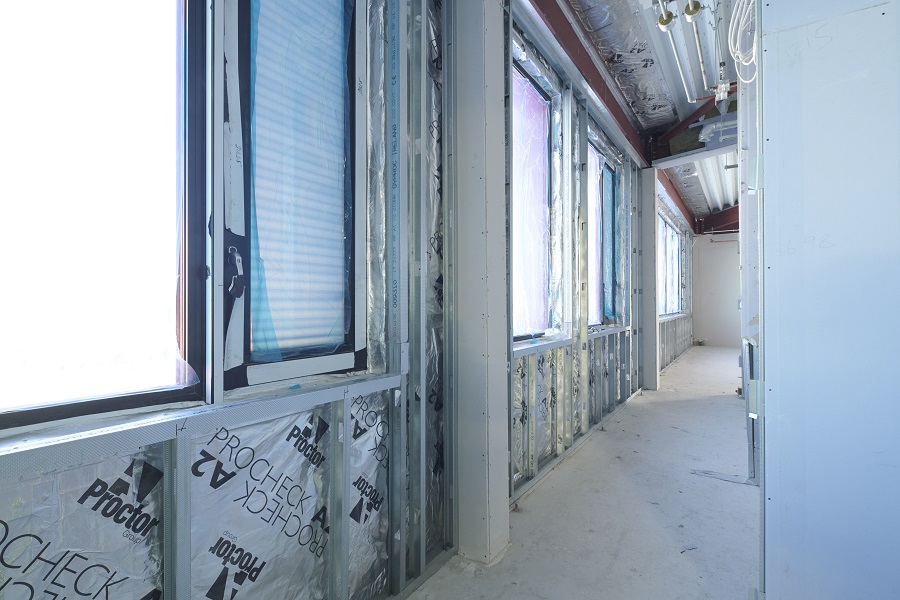
A membrane like Wraptite provides airtightness, while also being vapour permeable to help manage moisture risks in a wall build-up. It does not necessarily negate the need for a layer that also controls moisture vapour, so an internal membrane is often still specified. While that layer has the performance of an ‘AVCL’, for the application in question it is being specified only as a ‘VCL’.
This points to an important overall message: precision matters. Using generic terminology when membranes are serving a specific function risks clouding understanding around why particular solutions are needed within project-specific applications.
Find out more at https://proctorgroup.com/all-products
Related Products
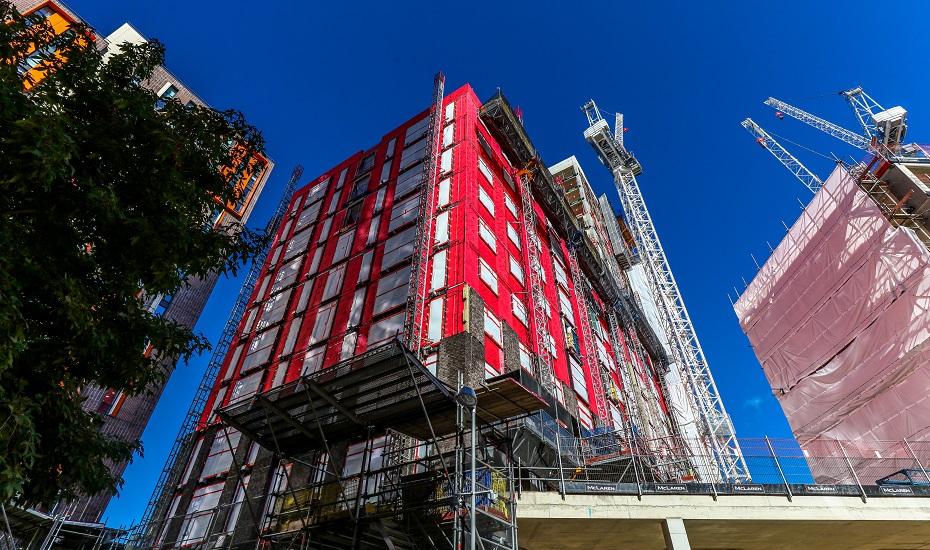
Wraptite® – Vapour Permeable Air Barrier
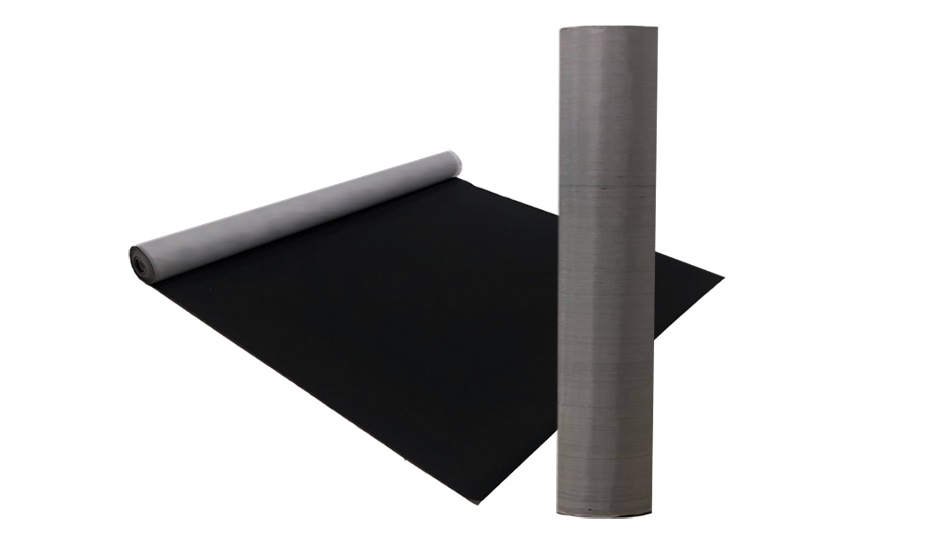
Probreathe® A2 – Vapour Permeable Breather Membrane
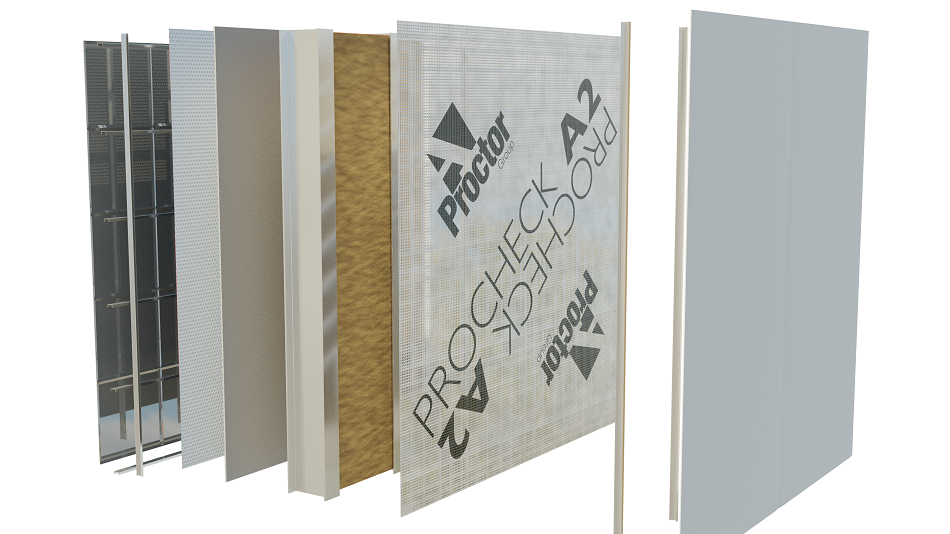
Procheck® A2 – A2 Fire-Rated Air and Vapour Control Layer
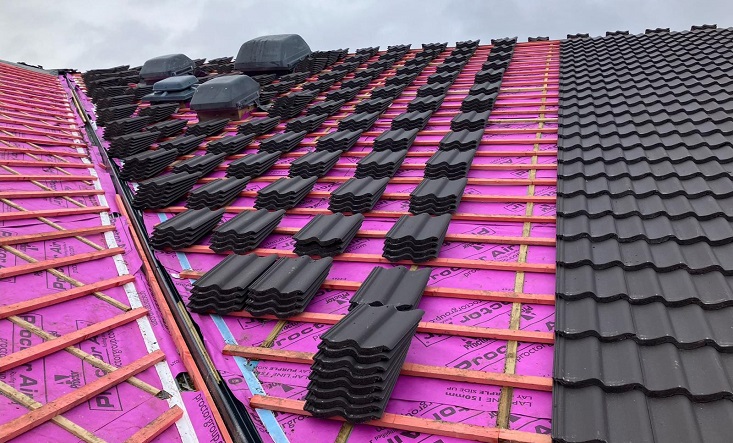
Proctor Air® – Air & Vapour Permeable Roofing Membrane
Latest Articles


Related Projects
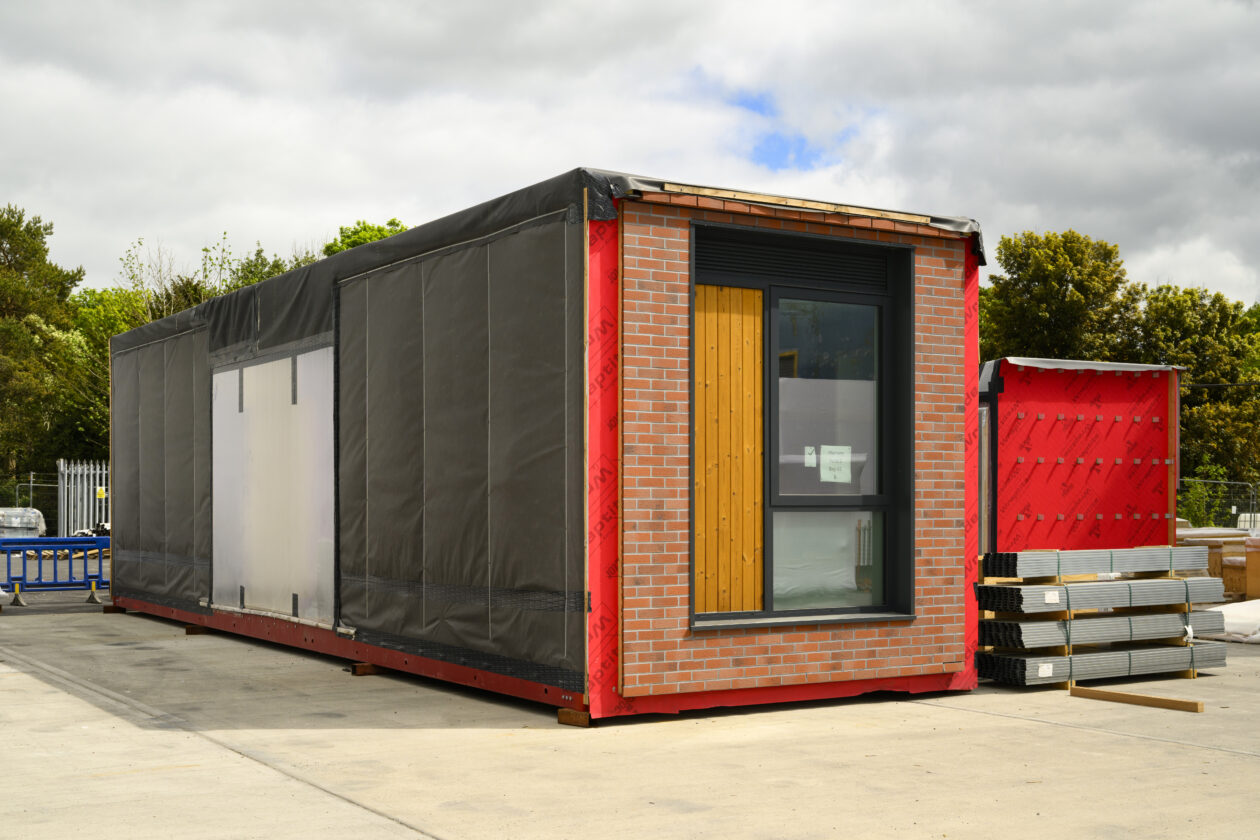
Reds10: Wraptite® for Near-Passivhaus Airtightness in Modular Construction
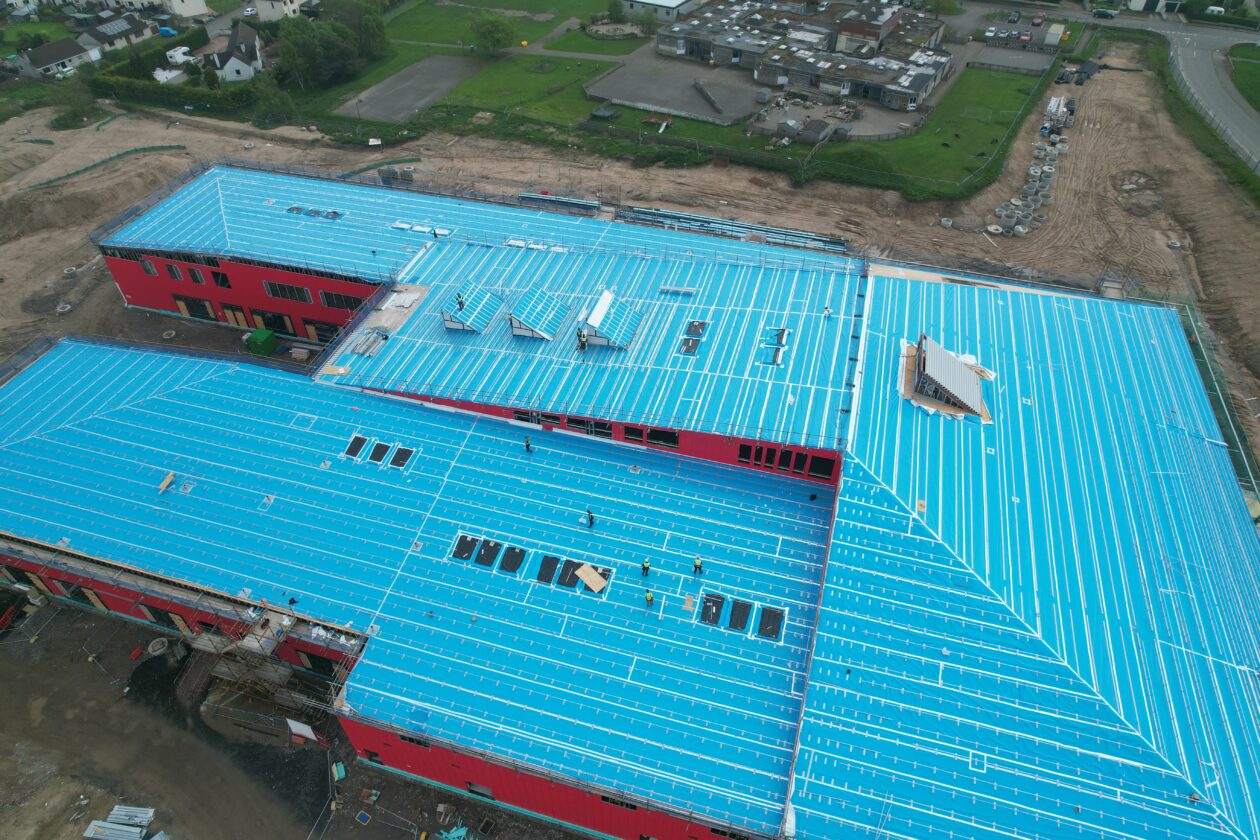
Tain Campus: Profoil 861 for Roof Airtightness in a Passivhaus-Standard School

Jacob’s Island: Wraptite® for an A2 Energy Rating in NZEB Apartments
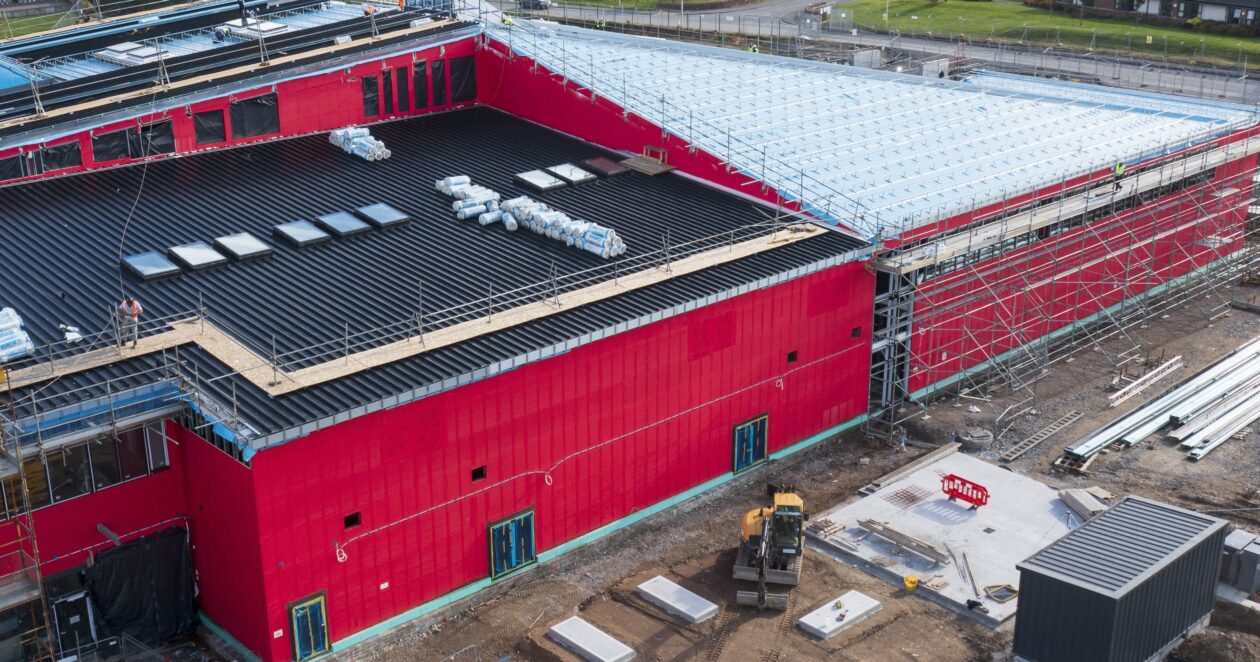
Tain Campus: Wraptite® for Passivhaus Airtightness with Offsite Installation
Latest News

Request a Sample

Technical Advice

CAD Detail Review

U-Value Calculation

Book a CPD

Specification Check